
A brand built
from the inside.
Automotive apparel, custom ecommerce and the operations behind the storefront. ClutchCloth is our own business, and a practical source of lessons we bring to digital work.
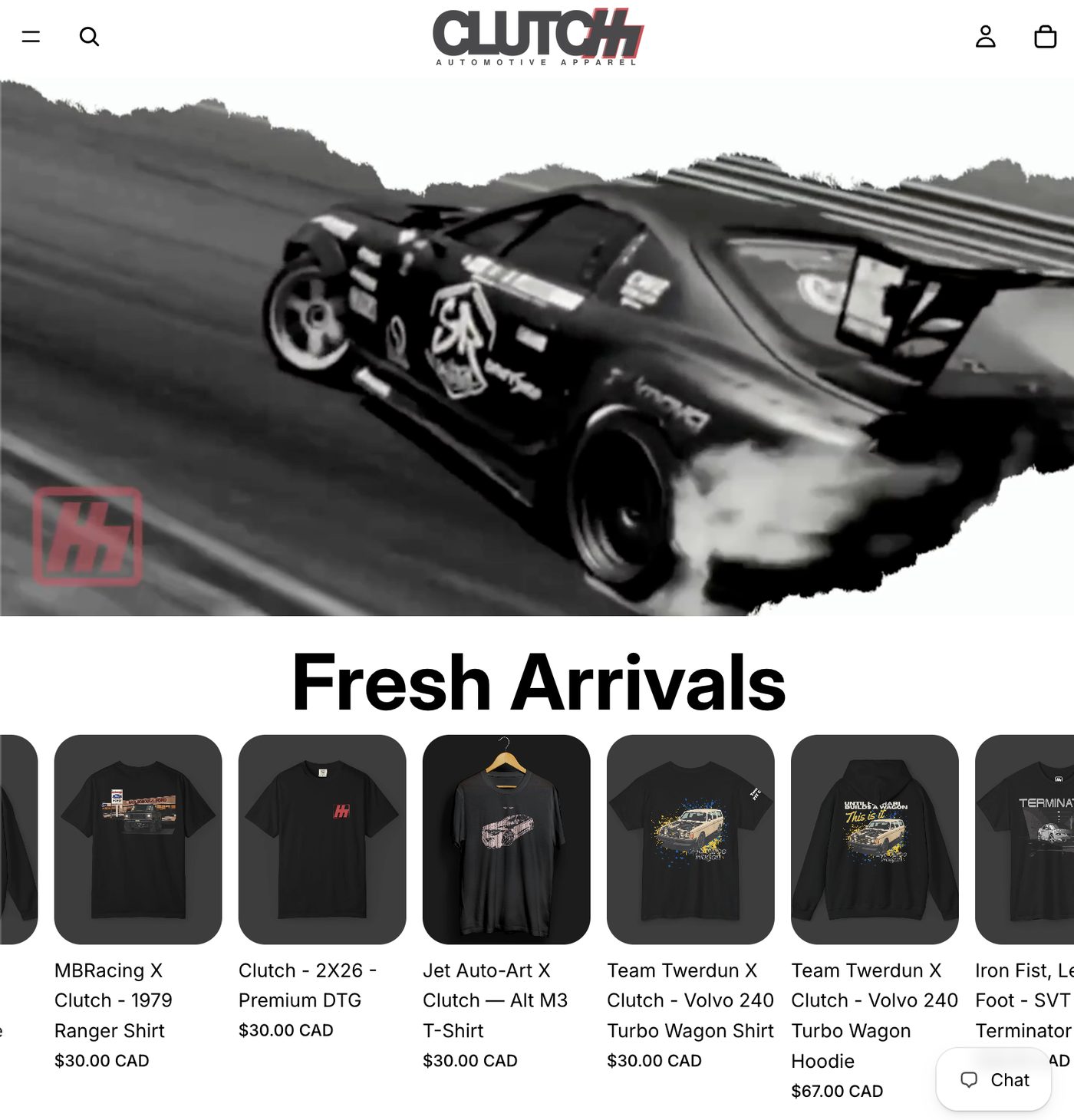
The details do the work.
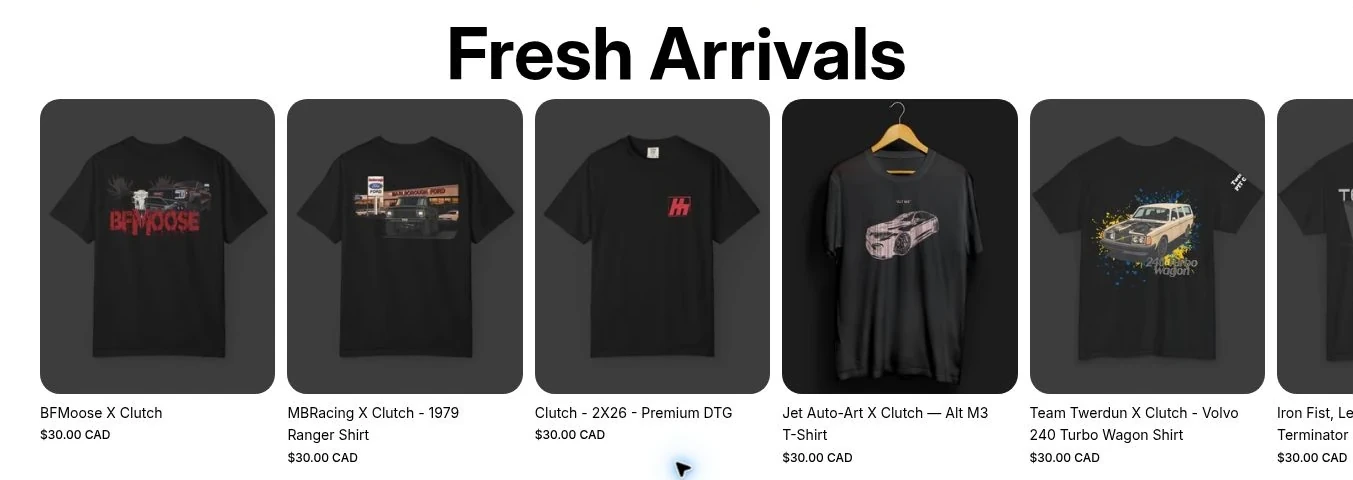
A recognisable collection.
Consistent product imagery and a clear hierarchy make the collection easier to scan.
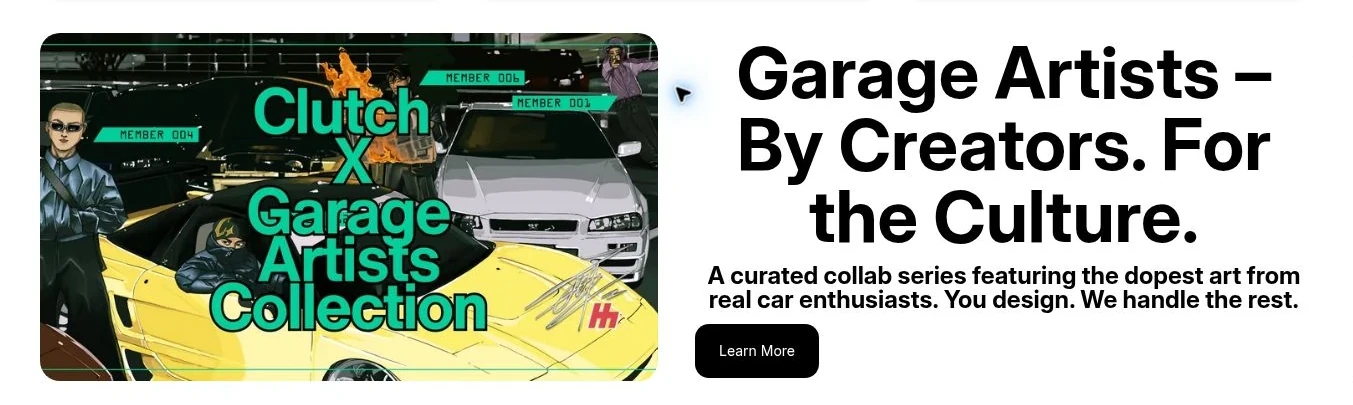
More than a catalogue.
Creator stories give the apparel context and connect the store to the community behind it.
The work
Brand and product design, storefront development, supplier coordination and ecommerce operations.
The environment
A Shopify storefront, with marketplace experience on Amazon and Etsy.
The learning
Traffic alone does not tell the whole story. Commercial decisions need context, cost and conversion data.
A useful case study.
With the context intact.
The published analysis compares a paid advertising period with a later organic period. It reports higher revenue and lower traffic in the later period.
That is an observation, not proof that turning off advertising caused revenue growth. Seasonality, repeat customers, product mix and the time windows also matter.
Read the original analysisBuilt and operated by Nagi.
- Owned venture, not a third-party client engagement
- Custom Shopify storefront and product design
- Ongoing operational learning
- WillowStone Marketing supported social media and paid ads during the campaign period
Traffic fell by half. Revenue nearly doubled.
Order count went up while visitor count went down. That is only possible if the visitors who remained were fundamentally different people, and they were. Someone searching for a specific car model has already decided they are interested. They arrive further down the funnel than any ad impression ever delivered.
The lifetime numbers look bad, and that is the interesting part.
A 0.15% conversion rate looks like a broken store. It is also badly misleading, and understanding why is the whole lesson. Roughly fifty thousand of those sessions came from the paid period. They sit in the denominator of every lifetime metric we have, which means our own reporting made the store look worse the more we spent.
We bought roughly fifty thousand sessions. They were worth less per visitor than the ones we earned. The sessions were real. The intent was not.
Judge a channel by orders per thousand sessions, not by sessions.
Paid social sent us many times the traffic organic did, and produced fewer orders per visitor. That one ratio would have changed our decisions a year earlier if we had been watching it. It is the first thing we look at in anyone else's analytics now.
On margin: print on demand has a reputation for being thin. On a representative order, after the manufacturing and shipping cost of the garment, gross margin lands above fifty percent. What makes it feel thin is fixed cost spread across too few orders: platform fees and apps cost roughly the same at eighty orders a year as at eight hundred. At our scale the fix was never “raise prices”. It was “get more of the right visitors”.
Organic did not beat paid. Showing up in person did.
Through 2025 we did pop-up shops, car meets and local events, standing behind a table talking to people who own the cars on the shirts. Almost none of that is attributable in Shopify. Someone meets you at a meet in June, remembers the name in September, searches it directly, and lands as organic or direct traffic. The event gets no credit; the search engine gets all of it.
So the honest conclusion is not “organic beats paid”. It is that a real presence in a real community creates the branded searches that later look like free traffic. Had we run the events without ever building the search visibility, or the search visibility without ever meeting anyone, neither would have worked as well.
We would rather show you our own scars than someone else's logo.
This is not a client case study and we are not going to dress it up as one. It is our own store, our own spend, and a mistake we made for about a year before the numbers convinced us otherwise. What is on services and websites comes out of work like this rather than a playbook.
The full working, including what we would fix first and in what order, is in the Field Note.
Good things start
with a conversation.
Tell us what you have in mind. We’ll help define what comes next.